
Chronopost brings delivery into the AI era
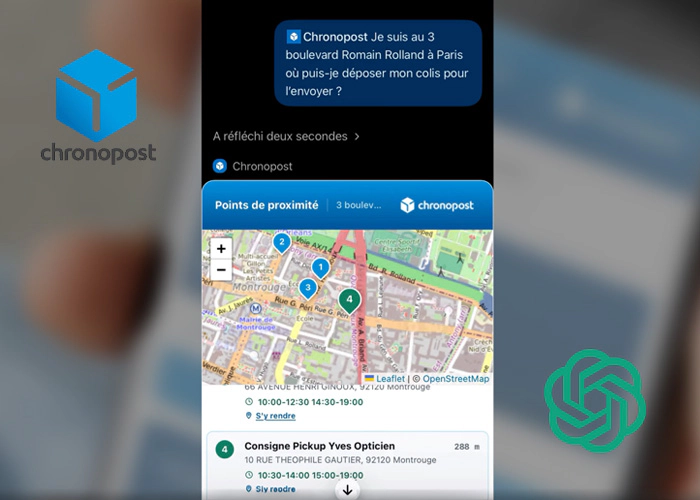
Tracking a parcel, finding a pick-up point or estimating the cost of a shipment simply by chatting with ChatGPT is now possible through the module developed by Chronopost with OpenAI. This is a first for a French carrier and illustrates the emergence of "agentic commerce", in which conversational assistants no longer simply provide consumers with information, but also play a role in their purchasing decisions.
For Chronopost, a subsidiary of Geopost, this innovation goes beyond simply adding a new service channel. It forms part of a broader reflection on the impact of artificial intelligence on commerce and logistics.
"At Chronopost, innovation means being where our customers are. This first step towards agentic commerce makes things simpler at both ends of the chain: for recipients, real-time tracking and an effortless search for pick-up points; for senders, instant pricing and easier shipping label creation," explains Benoît Frette, President of Chronopost.
When delivery influences purchasing decisions
For decades, delivery was regarded as the final stage of commerce. Yet it can increasingly influence the decision-making process even before a purchase is made.

Jean-Claude Sonet
Executive Vice President, Marketing, Communications and Sustainability at Geopost
In its recent position paper, published in English and entitled "The Last Mile of the Decision", Geopost analyses how AI agents could transform purchasing journeys and the criteria that shape consumer choices.
As AI agents become more sophisticated, they are becoming capable of comparing several offers simultaneously while taking numerous parameters into account. Price and availability will no longer be the only criteria. Carrier reliability, the flexibility of delivery options, service quality and environmental impact could also be taken into consideration.
"Delivery has moved beyond being simply a consequence of a purchase," adds Jean-Claude Sonet. "It can become one of the factors that determine which offer is recommended in the first place."
The challenge of visibility in AI systems
This shift presents a new challenge for brands, retailers and logistics providers. In a world where large language models (LLMs) are gradually becoming a gateway to online commerce, strong performance is no longer enough: that performance also needs to be visible and understandable to AI systems.
"Performing well is no longer enough," says Jean-Claude Sonet. "Performance needs to be visible in the right format. Data relating to delivery reliability, customer experience and environmental footprint will need to be structured, readable and comparable so that it can be incorporated into the recommendations made by intelligent agents."
A new competitive advantage
For companies, logistics could therefore become an even more strategic differentiating factor. When several offers have comparable prices and features, delivery quality could make the difference in AI-generated recommendations. This trend applies both to consumer e-commerce and B2B transactions, where service continuity and reliability remain essential.
"The future will probably be hybrid, with human interactions and AI systems at different stages of the journey," says Jean-Claude Sonet.
Delivery will no longer simply be the stage that concludes the customer experience, but also a signal of trust that could influence choices well before an order is placed.
"The last mile has always mattered," concludes Jean-Claude Sonet. "What is changing today is where its influence begins."