A job interview is not the same as an audition. The recruiter isn’t trying to catch you out, but rather to understand who you are professionally, and whether your way of working is a good fit for the role. More specifically, they’ll ask questions to try and confirm three things: do you understand what would be expected of you in the role? Can you illustrate your career to date with some specific examples? And what was it that motivated you to apply? The more successful you are in aligning your experience with the requirements of the role, the more convincing your presentation will be.
5 tips for preparing effectively for your interview
Re-read the vacancy details carefully. Not to regurgitate it, but to identify those points that really matter: the priority tasks, the wider context and the expected skills.
Then prepare two or three practical examples. Choose actual situations where you’ve made a difference: it could be a decision you made, a problem you solved or a project you led.
Learn more about the company. What it does, its values and its latest news… Making this preparatory effort will show that you’re serious about succeeding.
Check the interview details. Venue, time, contact person and interview format. Also make sure your contact details are up to date in case the recruiter needs to re-contact you.
Prepare the questions you’d like to ask at the end of your interview. By coming prepared with two or three questions about the role, the team or next steps, you’re already putting yourself in the role.
Online: the details that can change everything
Adobe Stock
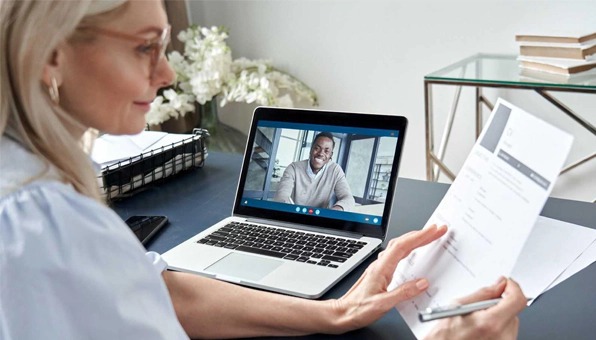
A video interview doesn’t change what you have to say, but it does raise the profile of some aspects. Poor lighting, a cluttered background or audio breakup can disrupt the conversation. Here are a few simple tips to help you prepare for your interview: test your internet connection and microphone, find a quiet place to sit with a neutral background, turn off notifications, and log in a few minutes before the interview is due to begin. During the conversation, look into the camera rather than at your own image; details like this create a sense of connection with the other person.
During and after the conversation: 5 tips that make all the difference
Take a step back from your CV. The recruiter will already have read that. What they’ll be looking for from you now are insights into your career to date, practical examples of your achievements and an understanding of your thought processes.
Listen to their questions in full. Take a moment to think before answering, if you need to. A well-thought-out answer is always better than an imprecise one given quickly.
Keep it clear and to the point. You don’t need to say everything. One or two well-illustrated ideas will have more impact than a speech that rambles in all directions.
Ask your questions at the end of the interview. The role, the team, short-term expectations, next steps in the process… If you want to discuss your salary, this is also the natural time to do so.
Send a message after the interview. Within 24 hours of the interview, send the recruiter a brief email restating your interest in the role, and perhaps elaborating on a point raised during your conversation. If you haven’t received a reply by the stated deadline, sending a single, polite reminder is entirely justified.
Questions - answers
Should you prepare your answers in advance of an interview?
Yes, but not simply so that you can trot them out word for word. What can be really helpful is preparing two or three real-life examples, re-read the vacancy details, and clarify which aspects of your career you want to highlight. The aim here is not to role play in your interview, but to ensure you arrive with the points you want to make clear in your mind so you won’t have to improvise important answers.
Are there differences when preparing for an online interview?
Essentially no, the preparation remains the same. But in terms of practicalities, there are a few additional details that deserve special attention: test your connection and audio, take care over the lighting and background, turn off notifications, and log in a few minutes early to avoid any technical hiccups.
Should you follow up after an interview?
It’s always a good idea to send a thank you message within 24 hours of your conversation. A short, friendly message can serve as a reminder of an important point or underline your motivation. If you haven’t received a reply by the stated deadline, sending a single, polite reminder is entirely appropriate.