Summary
La Poste Groupe integrates resource efficiency and the circular economy into its sourcing, equipment management and waste management practices. Since 2024, it has been developing a scientific method to measure its resource footprint. In 2025, reuse, recycling and repair generated savings in raw materials and equipment.
Measuring the footprint of consumed resources and materials
La Poste Groupe participates in international initiatives led by the World Business Council for Sustainable Development and the United Nations Environment Programme. It is among the very first companies worldwide to beta test the Global Circular Protocol presented at COP30.
La Poste Groupe has set itself the objective of becoming, by 2030, the first company with a certified trajectory compatible with planetary boundaries, defined and validated through an SBT-type (Science-Based Targets) framework recognised by the international community. As early as 2024, the Group launched work to develop a reference methodology, the Resources and Materials Methodology (RMM), to measure its resource footprint and define a trajectory. To test this innovative methodology, the Group is working with other companies committed to optimising their use of natural resources. The Group therefore aims to become the first company to have a science-based, controlled and optimised resources-and-materials trajectory.
Promoting the responsible use of resources
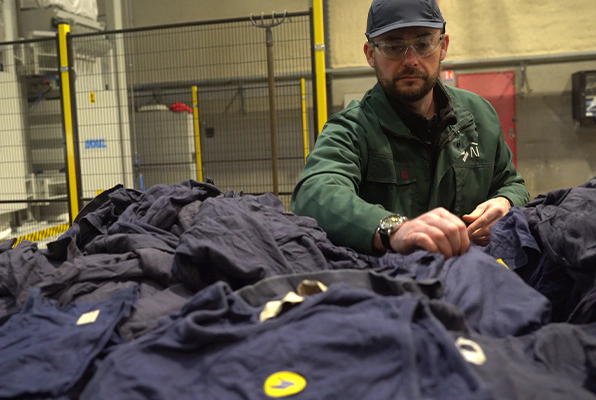
Since January 1, 2025, as part of the obligation to sort and recover professional clothing, La Poste has relied on its subsidiary Recygo, which has developed a pioneering 100% French value chain. In 2025, more than 96 tonnes of professional clothing from La Poste and other organisations were collected and recycled.
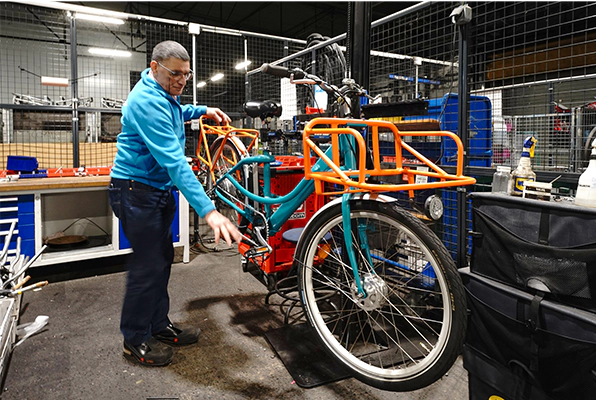
At the same time, its subsidiary Nouvelle Attitude contributes to the refurbishment of postmen's bicycles, which are restored by people undergoing employment integration programmes.
The Group also promotes internal reuse through its equipment exchange platform, which facilitates the transfer of equipment between Group entities. Since 2021, this has generated cumulative savings of €3.1 million.
To achieve its resource efficiency objective, the Group is deploying action plans to extend the lifespan of electrical and electronic equipment used by employees. This includes preventive maintenance, the use of protective equipment and repairs allowing equipment to be put back into service within the Group.
10,107 t
Of material consumption avoided
through extending the lifespan of IT equipment (2025)
22 300 t
Of IT equipment reused
96 t
Of professional clothing processed
Questions - answers
How does La Poste Groupe integrate the circular economy?
At every level: responsible purchasing, extending equipment lifespan, reuse, second-life solutions, and waste reduction and recovery.
How does La Poste Groupe promote the reuse of construction materials?
La Poste Immobilier (a subsidiary of La Poste Groupe), Icade, Valobat and Sequndo (a social and solidarity economy organisation) signed a partnership in 2025 aimed at structuring and professionalising the construction materials reuse sector. As part of this initiative, the four partners published a first practical guide for project owners, establishing standard practices and a shared methodology for selective deconstruction to support the wider adoption of construction material reuse.